Food machinery · 04
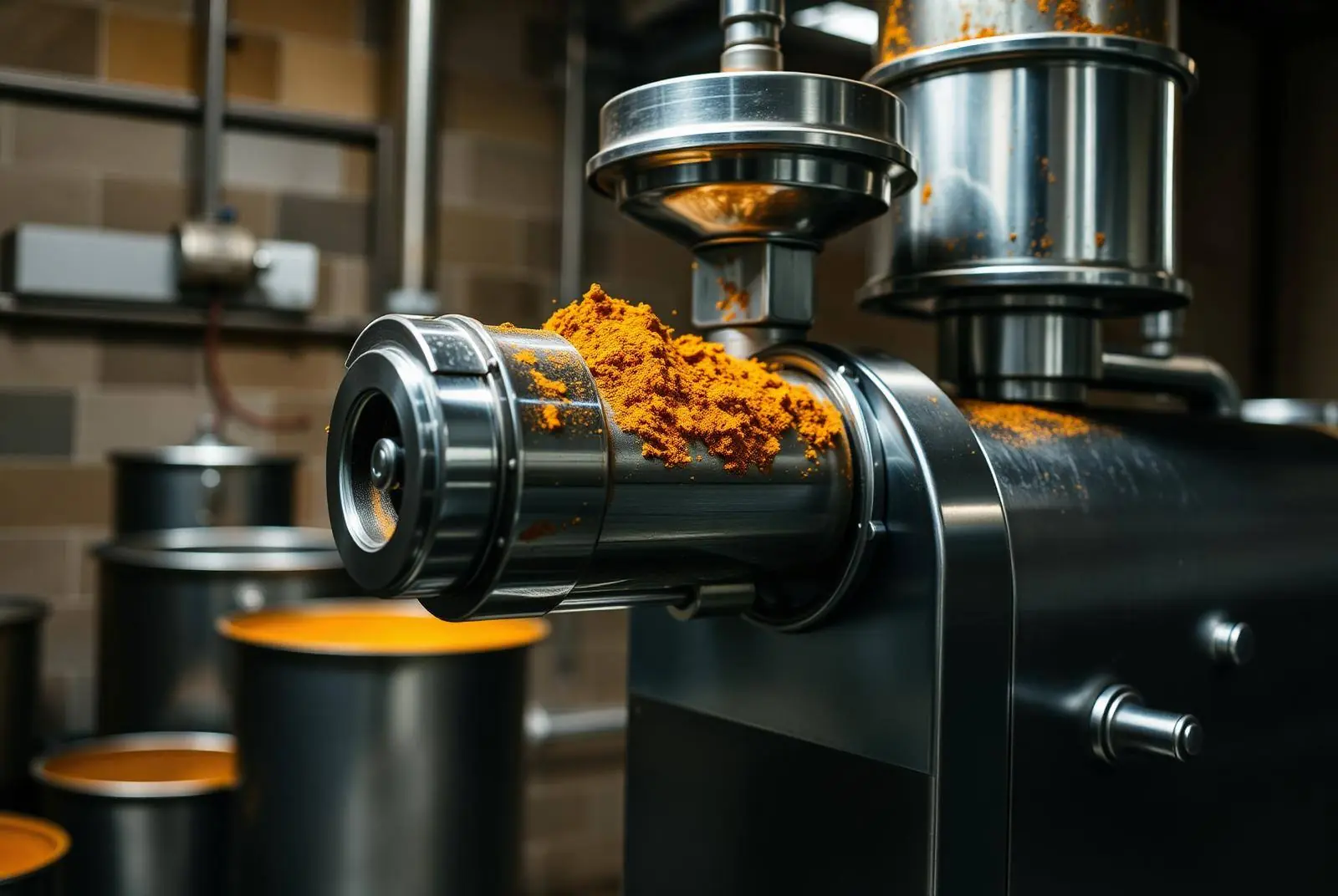
Grinding spice is a heat problem before it is a size problem.
Every volatile oil that gives a spice its aroma is lost the moment the grinding chamber gets hot. Indian spice machinery is engineered around that single constraint — air-swept chambers, chilled and cryogenic grinding, and staged sifting — which is why the world's masala plants are built here.
100 kg/h – 3 TPH
Capacity range
30 – 300 mesh
Fineness
SS 304 standard, SS 316 optional
Contact material
Cleaning to filled pouch
Scope
Overview
A masala line is six machines, not one grinder
Buyers often enquire for a pulveriser and discover they need a line: cleaning, drying, roasting, grinding, sifting, blending and filling. Skipping any stage shows up in the finished powder — as grit, as colour loss, or as a blend that separates in the pouch.
Cleaning comes first, because grit destroys hammers and screens faster than spice ever does. A standard line runs a vibro destoner and gravity separator, a magnetic separator, an air classifier to lift dust and light chaff, and a stem or stalk remover for chilli and coriander. Where the spice arrives above 10–12% moisture, a batch tray dryer or continuous belt dryer is added — grinding damp spice cakes the screens and destroys yield.
Roasting is optional but decisive for cumin, coriander, fenugreek and blended masalas. Batch roasters and continuous rotary roasters bring the seed to 90–140 °C for a controlled period, developing aroma, then a cooling conveyor drops the temperature quickly so residual heat does not carry into the grinder.
Grinding is selected by product. Impact pulverisers with swing hammers and screen sets handle turmeric, chilli, coriander and dry blends at 30–100 mesh. Air classifier mills give tighter particle distribution for premium powders. Cryogenic grinding, where liquid nitrogen holds the chamber at −20 to −60 °C, is the only way to retain full volatile oil in cumin, cardamom, black pepper and clove — typically preserving 25–40% more volatile oil than ambient grinding. Chilli requires special handling: oleoresin-rich chilli gums the chamber, so chilled and multi-stage grinding with pre-cooling is standard.
After grinding, vibro and gyro sifters grade the powder to specification and return oversize for regrinding. Ribbon and double-cone blenders homogenise multi-ingredient masalas over 8–20 minutes; blend uniformity is verified by sampling from multiple points. Filling is by auger filler for powders — 10 g sachets through 1 kg pouches and 25 kg sacks — with metal detection, nitrogen flushing where shelf life demands it, and date coding.
At a glance
- Spices handled
- Turmeric, chilli, coriander, cumin, black pepper, fenugreek, cardamom, clove, ginger, dry masala blends
- Grinding options
- Impact pulveriser, air classifier mill, chilled grinder, cryogenic mill
- Fineness range
- 30–300 mesh, screen or classifier controlled
- Contact parts
- SS 304 as standard; SS 316 for acidic and chloride-bearing products
- Cryogenic consumption
- 0.8–1.5 kg liquid nitrogen per kg of spice
- Lead time
- 35–50 days for grinding units; 90–120 days for turnkey masala plants
How we work
We source from India's established brands — we do not manufacture
Akarta Exports is a sourcing and export house. We do not own factories and we do not claim to. Our value is that we know which well-known Indian brands and manufacturers make what, to what standard, and at what price — and we buy from them to the exact specification you give us.
01 — Your specification, written down
We start from your specification, not from a catalogue. Grade, dimension, tolerance, finish, test standard, pack, artwork and labelling are put in writing and confirmed with you before a single enquiry goes out.
02 — Matched to the right Indian brand
We place that specification with established, well-known Indian brands and manufacturers in the cluster that genuinely makes the product — Morbi for tiles, Rajkot and Ludhiana for machinery, Meerut and Jalandhar for sports goods, Kerala and Gujarat for spices.
03 — Offers compared on merit
Because we own no plant and owe no factory a minimum offtake, we compare offers openly on quality, consistency, capacity and price — and tell you where a lower price will not hold up in your market.
04 — Inspected, consolidated, shipped
Our own inspectors clear the goods at the brand's plant and again before loading. Multiple brands and multiple divisions consolidate into one container, one invoice and one document set.
Brand names are disclosed to you on the offer and named on the inspection report, so you always know whose production you are buying. Where a buyer already has a preferred Indian brand, we are happy to source that brand and handle only the inspection, consolidation, documentation and shipping.
The range
Spice processing equipment we supply
This is the full line. A small masala unit takes the pulveriser, sifter and filler; an export-grade plant takes everything.
- Cleaning & grading
- Vibro destoners and gravity separators, magnetic and metal separators, air classifiers, chilli stem cutters, coriander stalk removers and rotary graders, with dust extraction on every transfer point.
- Drying
- Batch tray dryers of 12–200 trays, continuous belt dryers, fluid-bed dryers and turmeric boilers or polishers, with steam, electric or thermic-fluid heating and temperature control to protect colour.
- Roasting & cooling
- Batch drum roasters of 25–200 kg and continuous rotary roasters of 100–1,000 kg/h with LPG, diesel or electric heating, followed by cooling conveyors and cyclone separators.
- Impact pulverisers & hammer mills
- Air-swept impact pulverisers of 50 kg/h to 2 TPH with hardened swing hammers, interchangeable screens from 30 to 200 mesh, blower, cyclone and jet-pulse bag filter, in SS 304 contact finish.
- Cryogenic & chilled grinding
- Cryogenic grinding systems with liquid nitrogen dosing, insulated pre-cooling screw conveyor and jacketed chamber holding −20 to −60 °C, plus chilled-water jacketed grinders for chilli and oleoresin-rich spices.
- Air classifier mills
- Classifier mills with variable-speed rotor and integral dynamic classifier for narrow particle-size distribution, 100–300 mesh, used for premium and pharma-grade spice powders.
- Sifting & blending
- Vibro and gyro sifters of 500–3,000 mm diameter with multi-deck screens, plus ribbon blenders of 100–2,000 litres and double-cone blenders for masala homogenisation with liquid-oil spray dosing.
- Filling & packing
- Auger fillers for 5 g to 1 kg packs, form-fill-seal pouch machines, jar and bottle fillers, 25 kg bag weighers, metal detectors, nitrogen flushing and inkjet or thermal date coding.
Technical data
Grinding plant specifications by capacity
Indicative figures on dry spice at 8–10% moisture. Oleoresin-rich and high-moisture products reduce throughput significantly on the same machine.
Swipe table to see all columns →
| Machine / plant | Throughput | Main motor | Fineness | Utilities | Footprint |
|---|---|---|---|---|---|
| Pulveriser, small | 50–150 kg/h | 7.5–15 kW | 30–100 mesh | Electric only | 20–40 m² |
| Pulveriser, mid | 300–600 kg/h | 22–37 kW | 30–120 mesh | Electric, dust filter | 50–90 m² |
| Pulveriser, large | 1–2 TPH | 55–110 kW | 30–120 mesh | Electric, dust filter | 120–200 m² |
| Chilled chilli grinding line | 300–800 kg/h | 45–90 kW | 40–80 mesh | Chilled water 5–15 TR | 150–300 m² |
| Cryogenic grinding unit | 100–500 kg/h | 30–75 kW | 80–300 mesh | Liquid nitrogen 0.8–1.5 kg/kg | 100–250 m² |
| Air classifier mill | 150–800 kg/h | 37–90 kW | 100–300 mesh | Electric, compressed air | 100–200 m² |
| Turnkey masala plant | 500 kg/h – 3 TPH | 80–250 kW total | As per recipe | Steam or LPG, chilled water, air | 300–800 m² |
Quality parameters typically targeted: turmeric curcumin 2–5%, chilli ASTA colour 60–180, moisture below 10%, total ash within Codex and destination-market limits. Grinding retains rather than creates these values, so cleaning and drying matter as much as the mill.
Applications & markets
Configurations by product and market
Different spices break the same machine in different ways, so lines are configured product by product.
Turmeric & chilli powder units
- Boiler, polisher and dryer ahead of grinding for raw turmeric
- Chilled grinding chambers to stop oleoresin gumming
- Colour retention through low-temperature, air-swept milling
- ASTA colour and curcumin testing equipment quoted alongside
Premium whole-spice grinders
- Cryogenic grinding for cumin, pepper, cardamom and clove
- Volatile oil retention 25–40% above ambient grinding
- Air classifier milling for uniform particle distribution
- Nitrogen-flushed packing for extended shelf life
Masala blend manufacturers
- Ribbon blenders with liquid-oil spray dosing
- Recipe batching by weigh hopper and load cells
- Multi-product changeover cleaning design
- Sachet and pouch lines for 10 g to 500 g retail packs
Export & contract processors
- SS 304 or SS 316 contact parts throughout the line
- Metal detection and sieve integrity checks for retail audits
- HACCP-compatible layout with segregated raw and finished zones
- Documentation for FDA, EU and Middle East market requirements
Division in numbers
3
TPH largest masala plant
Cleaning, grinding, blending and filling
300
Mesh maximum fineness
Air classifier and cryogenic milling
−60°C
Cryogenic chamber temperature
Liquid nitrogen cooled grinding
40%
Extra volatile oil retained
Cryogenic versus ambient grinding
Quality assurance
Nothing leaves India until our own inspectors clear it
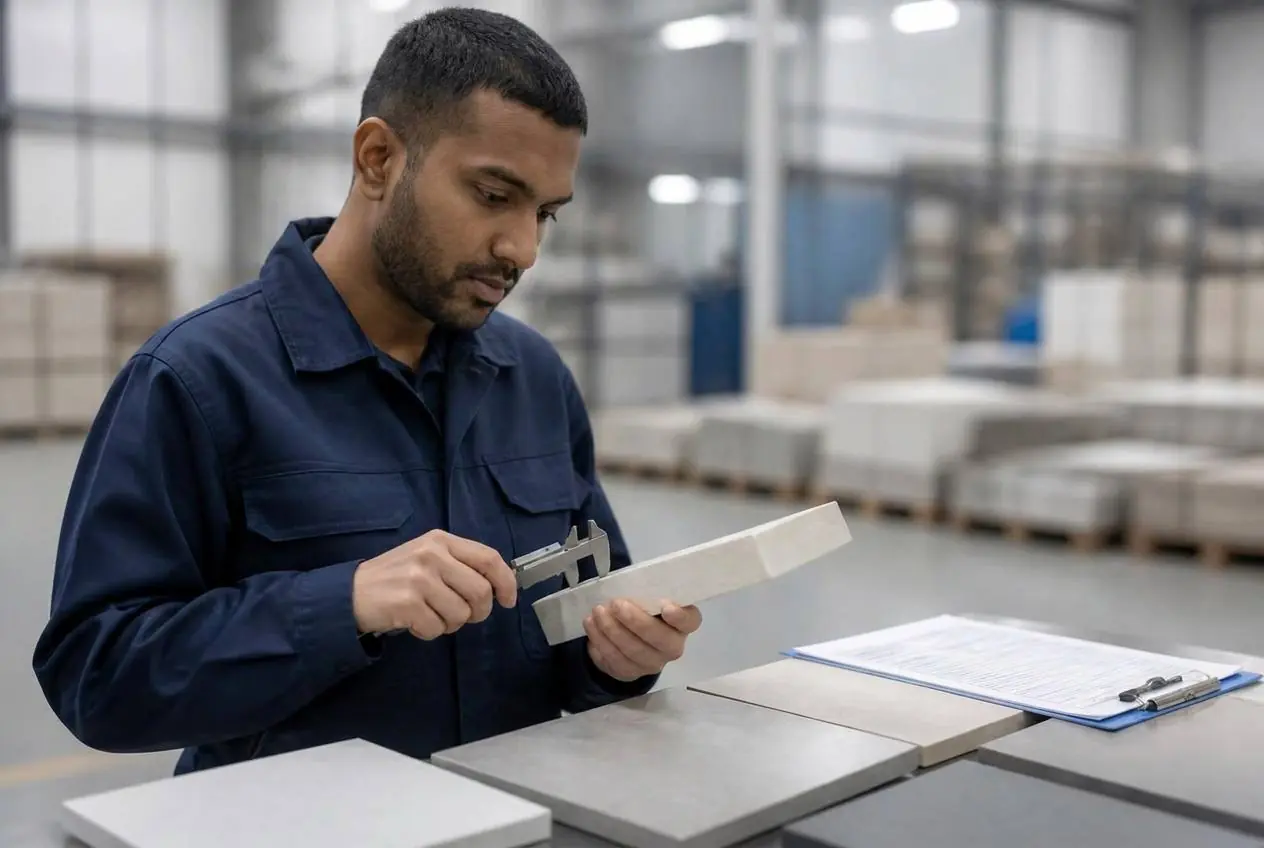
Akarta runs an in-house quality department with inspectors assigned to each division. Goods are checked at the factory during production and again before loading, against the written specification agreed on your purchase order — not against the factory's own grading.
- Pre-production sample approved by the buyer before bulk manufacture begins
- In-line checks during production for shade, calibration, dimension and moisture
- Pre-shipment inspection with photographic report before container sealing
- Third-party inspection (SGS, Bureau Veritas, Intertek) arranged where required
ISO 9001:2015
Certified quality management system
Govt. approved
Registered Indian merchant exporter
In-house docs
Export paperwork prepared by our team
Packing & shipping
Packed the way your market receives it
Spice machinery is food-contact equipment, so packing keeps stainless surfaces clean and dry as well as undamaged.
- Pulveriser bodies crated with hammers and screens removed, boxed and labelled by mesh
- SS 304 contact surfaces film-protected and sealed against sea-air staining
- Cyclones and bag filters nested where possible to reduce container volume
- Blenders shipped with shaft and ribbon secured, seals greased and covered
- Cryogenic insulated conveyors crated with vacuum jacket protection and lifting points
- Crate-wise packing list keyed to the line layout and equipment tag numbers
Documentation
Paperwork prepared in-house, not outsourced
Every consignment travels with a complete document set, prepared by our own documentation team and checked against your letter of credit or contract terms before dispatch.
Line layout & material flow
Machine sequence with raw, in-process and finished zones separated for hygiene audits.
Utility schedule
Electrical load, compressed air, chilled water tonnage and liquid nitrogen consumption per tonne of product.
Food-contact material certificates
Mill test certificates for SS 304 or SS 316 contact parts and food-grade gasket declarations.
O&M and screen chart
Hammer and screen change intervals, mesh chart against product fineness, cleaning and changeover procedures.

Global reach
Quoted in your currency, shipped from your nearest Indian port
Enquiries reach us from importers, distributors, contractors and retail chains across five continents — Africa, the Middle East, Europe, the Americas and Asia-Pacific. We quote FOB, CFR or CIF, load from Mundra, Kandla, Nhava Sheva or Pipavav depending on your routing, and keep one commercial contact accountable for the consignment from purchase order to bill of lading.
Africa
Kenya, Tanzania, Uganda, Ethiopia, Nigeria, Ghana, Côte d'Ivoire, Senegal, Egypt, Morocco, Algeria, Sudan, Mozambique, Zambia, South Africa
Middle East
UAE, Saudi Arabia, Qatar, Oman, Kuwait, Bahrain, Jordan, Iraq
Europe
Netherlands, Germany, Spain, Italy, Poland, United Kingdom
Americas
United States, Canada, Mexico, Brazil, Chile
Asia-Pacific
Australia, New Zealand, Singapore, Malaysia, Vietnam, South Korea, Japan
Load ports
Mundra · Kandla · Pipavav · Nhava Sheva
Incoterms
FOB · CFR · CIF · EXW on request
Correspondence
English, with documentation to buyer-country requirements
Buyer questions
What importers usually ask us first
Do we need cryogenic grinding?
Only for volatile-oil-rich spices where aroma is the product: cumin, black pepper, cardamom, clove, nutmeg. For turmeric, chilli and coriander, chilled or well-designed air-swept ambient grinding is sufficient and far cheaper to run — cryogenic grinding consumes 0.8–1.5 kg of liquid nitrogen per kilogram of spice, which is a real operating cost.
Why does chilli need special machinery?
Chilli is high in oleoresin and, in many varieties, high in residual moisture. Both make it stick: the powder cakes on the hammers and screens, the chamber temperature rises and the colour fades. Chilled grinding with a jacketed chamber, pre-cooled feed and multi-stage reduction keeps the product free-flowing and protects ASTA colour.
Can one line handle several spices?
Yes, and most masala plants do. Multi-product lines are designed for cleaning between products: quick-release screens, hinged access doors, smooth internal welds and no dead pockets where powder can lodge. We plan the changeover procedure at design stage rather than leaving your operators to improvise it.
What fineness can you achieve?
Impact pulverisers with screen sets comfortably deliver 30–120 mesh, which covers most retail masala. Air classifier mills and cryogenic systems reach 200–300 mesh with a much tighter particle-size distribution, which is what pharma, extract and premium retail buyers ask for. Fineness is set by screen or classifier speed and confirmed on trial grinding of your material.
Is the machinery suitable for organic or export-audited production?
Yes. Contact parts are quoted in SS 304 as standard, with SS 316 available where product acidity or chlorides demand it, and mill test certificates are supplied. Layout is drawn for HACCP-style zoning with segregated raw and finished areas, and metal detection is included on the packing line for retail audits.
Common enquiries
Specifications buyers most often ask us to quote
These are the enquiries that reach this desk most weeks. If yours is on the list, we already have the grades, packing and loadability worked out — send the quantity and destination port and we will price it.
Also in this division
Related ranges
Export desk
Request a quotation
Send your product type, grade, quantity and destination port. Our export desk replies with available grades, packing options, loadability and indicative pricing — usually within one working day.