Textiles & apparel · Fabrics & yarn
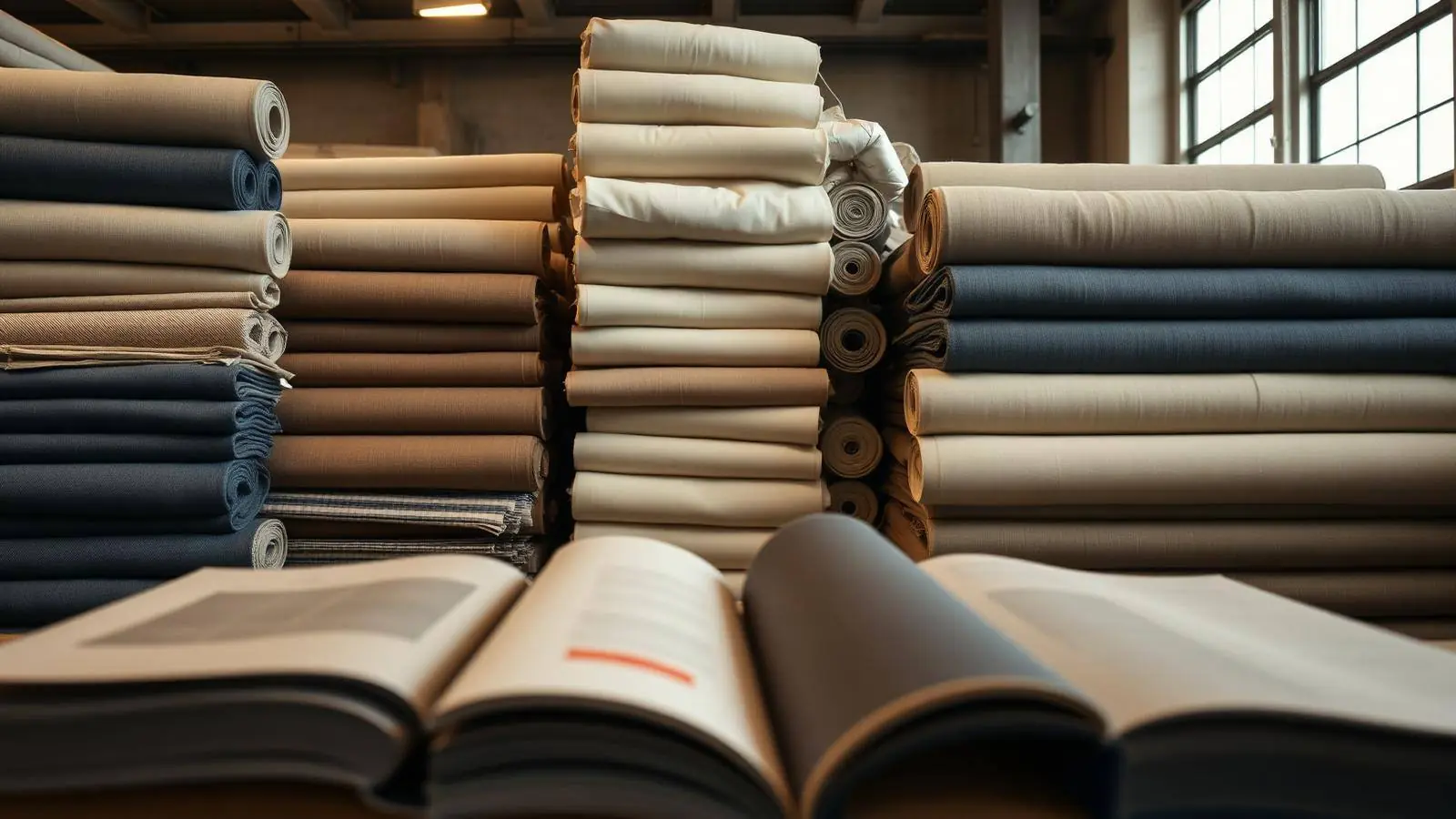
Fabric quoted as a construction, not as a swatch.
A fabric enquiry that says 'cotton twill, medium weight' cannot be priced honestly. We quote yarn count, ends and picks, weave, width, finished GSM, finish route and shrinkage, buy from Surat, Ahmedabad, Erode, Tiruppur and Ludhiana mills against that pack, and release cutting only after a 4-point inspection of the lot.
Woven · knitted · denim · blends · yarn
Ranges
Surat · Ahmedabad · Erode · Tiruppur · Ludhiana
Clusters
44" to 118" including wider sheeting widths
Width
3,000–5,000 m per shade; 1 tonne per yarn count
MOQ
Overview
Greige, dyed, printed or finished — priced at the stage you buy
Buyers reach us at different points in the chain. Some want greige to process locally, some want fully finished rolls ready to cut, some want yarn. Each stage carries its own price basis, testing and risk, and we quote them separately rather than blending them into one number.
Greige fabric is priced on construction and cotton contract, so it moves with cotton and yarn markets. Buyers taking greige for local processing get a loom-state 4-point inspection report, roll-wise metreage and a shrinkage baseline, and we state the reed and pick tolerance we will accept rather than leaving it open.
Finished fabric adds the processing route to the specification: singeing, desizing, scouring, bleaching, mercerising, dyeing method, printing method, sanforising, calendering and any functional finish. Two mills can produce the same construction and deliver noticeably different hand, shade depth and shrinkage, so the finish route is written into the pack and locked to the approved lot.
Knitted fabric is bought on machine gauge, loop length, GSM and finished width, tubular or open-width. Single jersey, interlock, pique, rib, fleece and terry each have their own dimensional-stability behaviour, and spirality on single jersey is the defect that most often gets missed until garments are washed — so we test it before approving.
Denim is bought on weight in ounces, warp construction, indigo shade, stretch content and mechanical finish. Ahmedabad mills cover 6 oz shirting weights through 14 oz rigid, in rope-dyed and slasher-dyed indigo, with 1–3% elastane for comfort stretch and dual-core options where recovery matters.
Yarn is bought on count, spinning system and use. Combed and carded cotton in Ne 16 to 60, single and doubled, ring-spun, open-end and compact, plus poly-cotton and viscose blends. Yarn quality is quoted on Uster CV%, IPI, strength and elongation, not just on count.
Certification we routinely arrange includes OEKO-TEX Standard 100, GOTS and OCS for organic cotton, BCI for Better Cotton, and GRS for recycled polyester and cotton.
At a glance
- Woven cotton
- Poplin, cambric, voile, twill, drill, canvas, oxford, chambray, dobby, flannel, corduroy, sheeting
- Knitted
- Single jersey, interlock, pique, rib 1×1 and 2×2, fleece, French terry, lycra jersey
- Denim
- 6–14 oz rigid and stretch, rope and slasher dyed, right- and left-hand twill
- Blends
- Poly-cotton, CVC, viscose, rayon, modal, linen and linen-cotton, PC and PV suiting
- Yarn
- Combed and carded cotton Ne 16–60, ring-spun, compact and open-end, single and doubled
- Testing
- 4-point inspection, GSM, EPI/PPI, ISO 6330 shrinkage, fastness, tensile, tear, pilling, spirality
How we work
We source from India's established brands — we do not manufacture
Akarta Exports is a sourcing and export house. We do not own factories and we do not claim to. Our value is that we know which well-known Indian brands and manufacturers make what, to what standard, and at what price — and we buy from them to the exact specification you give us.
01 — Your specification, written down
We start from your specification, not from a catalogue. Grade, dimension, tolerance, finish, test standard, pack, artwork and labelling are put in writing and confirmed with you before a single enquiry goes out.
02 — Matched to the right Indian brand
We place that specification with established, well-known Indian brands and manufacturers in the cluster that genuinely makes the product — Morbi for tiles, Rajkot and Ludhiana for machinery, Meerut and Jalandhar for sports goods, Kerala and Gujarat for spices.
03 — Offers compared on merit
Because we own no plant and owe no factory a minimum offtake, we compare offers openly on quality, consistency, capacity and price — and tell you where a lower price will not hold up in your market.
04 — Inspected, consolidated, shipped
Our own inspectors clear the goods at the brand's plant and again before loading. Multiple brands and multiple divisions consolidate into one container, one invoice and one document set.
Brand names are disclosed to you on the offer and named on the inspection report, so you always know whose production you are buying. Where a buyer already has a preferred Indian brand, we are happy to source that brand and handle only the inspection, consolidation, documentation and shipping.
The range
The fabric and yarn programme in detail
- Cotton shirting & dress fabrics
- Poplin in 40s×40s and 60s×60s, cambric, voile, lawn, dobby, oxford and royal oxford, chambray, end-on-end, seersucker, printed and yarn-dyed checks and stripes, and cotton-linen shirting. Widths 44", 58" and 60", finished GSM roughly 90–160, with easy-care, wrinkle-free and mercerised finishes available.
- Bottom-weight & workwear fabrics
- Cotton twill in 2/1 and 3/1, drill, gabardine, canvas in 8–16 oz, duck, ripstop, cargo twill, and poly-cotton 65/35 and 80/20 workwear cloth in 190–320 GSM. Optional water-repellent, teflon, anti-static, flame-retardant and hi-vis fluorescent finishes for uniform and industrial programmes.
- Denim
- 6, 8, 10, 11, 12, 13 and 14 oz denims in rigid and stretch, right- and left-hand twill, rope-dyed and slasher-dyed indigo, black-black and over-dyed shades, slub and cross-hatch effects, 1–3% elastane comfort stretch, dual-core and bi-stretch, plus knitted denim for jeggings and soft-hand constructions.
- Knitted fabrics
- Single jersey in 140–200 GSM, combed and carded, interlock 180–240 GSM, pique and honeycomb 180–220 GSM, rib 1×1 and 2×2, French terry 240–320 GSM, brushed and unbrushed fleece 280–380 GSM, jersey with 3–8% elastane, slub and melange jersey, and jacquard knits. Tubular or open-width, in 20–34 gauge.
- Synthetic & blended fabrics
- Poly-cotton and CVC shirting and sheeting, viscose rayon and rayon-crepe dress material, modal and modal blends, poly-viscose suiting, georgette, crepe, satin, chiffon, lycra-blend jersey, spun poly and printed synthetics from the Surat cluster, plus recycled polyester constructions under GRS.
- Yarn
- 100% cotton combed and carded ring-spun yarn in Ne 16, 20, 24, 26, 30, 34, 40, 50 and 60, single and two-ply, compact and open-end rotor yarn, gassed mercerised yarn, melange and slub yarn, poly-cotton and poly-viscose blended yarn, plus organic and BCI cotton yarn with transaction certificates.
Technical data
Construction data we quote against
Indicative constructions from the mills we buy most often. Exact figures, finish route and shrinkage are confirmed on the approved lot before bulk.
Swipe table to see all columns →
| Fabric | Construction | Width | Finished GSM | Finish route | Shrinkage (warp × weft) |
|---|---|---|---|---|---|
| Cotton poplin | 40s×40s / 133×72 | 58" | 105–115 | Bleached, dyed, sanforised | ≤2.5% × ≤2% |
| Fine poplin | 60s×60s / 92×88 | 58" | 95–105 | Mercerised, easy-care | ≤2% × ≤2% |
| Cotton twill 3/1 | 20s×16s / 128×60 | 58" | 230–250 | Dyed, sanforised, softened | ≤3% × ≤2% |
| Cotton canvas | 10s×10s / 72×44 | 60" | 300–320 | Dyed, water-repellent option | ≤3% × ≤2.5% |
| PC workwear twill | 65/35 · 20s×20s / 108×58 | 60" | 190–210 | Dyed, anti-static option | ≤2% × ≤1.5% |
| Denim 12 oz rigid | 7s×7s / 68×46 · 3/1 RHT | 58/60" | 405 (12 oz) | Rope-dyed indigo, skewed | ≤3% × ≤2% |
| Denim 10.5 oz stretch | 10s×16s+70D · 2% elastane | 56/58" | 355 (10.5 oz) | Slasher-dyed, mercerised | ≤2.5% × ≤3% |
| Single jersey | 30s combed · 24 gauge | Tubular 30–36" | 160–180 | Bio-washed, silicone soft | ≤5% × ≤5% |
| French terry | 20s+30s · 20 gauge | Open width 68" | 280–300 | Enzyme wash, brushed option | ≤5% × ≤5% |
| Pique | 30s combed · honeycomb | Open width 66" | 200–220 | Dyed, silicone finish | ≤5% × ≤4% |
Knitted shrinkage is quoted lengthwise and widthwise after three ISO 6330 wash cycles; spirality is held to 5% maximum on single jersey. Woven shrinkage is quoted after sanforising on the approved finish route.
Applications & markets
Who buys fabric from us
Garment manufacturers
- Cut-ready finished rolls with 4-point reports
- Shade continuity across a full cutting programme
- Roll-wise metreage and shade-lot documentation
- Shrinkage baseline for pattern compensation
- Trial-lot supply before committing bulk
- Interlining, lining and trims sourced alongside
Processing houses & converters
- Greige fabric at loom state with reed-pick tolerance
- Consistent construction across repeat lots
- Bulk metreage on rolling monthly schedules
- Cotton-contract-linked pricing transparency
- Mill-direct sourcing with named origin
- Open-width or tubular knit to your machine
Uniform & workwear programmes
- PC and cotton twill in 190–320 GSM
- Hi-vis fluorescent shades to EN ISO 20471
- Flame-retardant and anti-static finishes
- Colour continuity over multi-year contracts
- Industrial-wash-rated fastness levels
- Reflective tape and trims quoted together
Home textile & furnishing makers
- Wide-width sheeting up to 118"
- Printed and yarn-dyed furnishing constructions
- Canvas and duck for bags and upholstery
- Jacquard and dobby decorative weaves
- Waffle, terry and huckaback kitchen cloth
- Coordinated print programmes across widths
Division in numbers
Ne 16–60
Yarn counts
Combed, carded, compact and rotor
6–14 oz
Denim range
Rigid, stretch and dual-core
118"
Maximum width
Wide sheeting constructions
4-point
Roll inspection
Before cutting is released
Quality assurance
Nothing leaves India until our own inspectors clear it
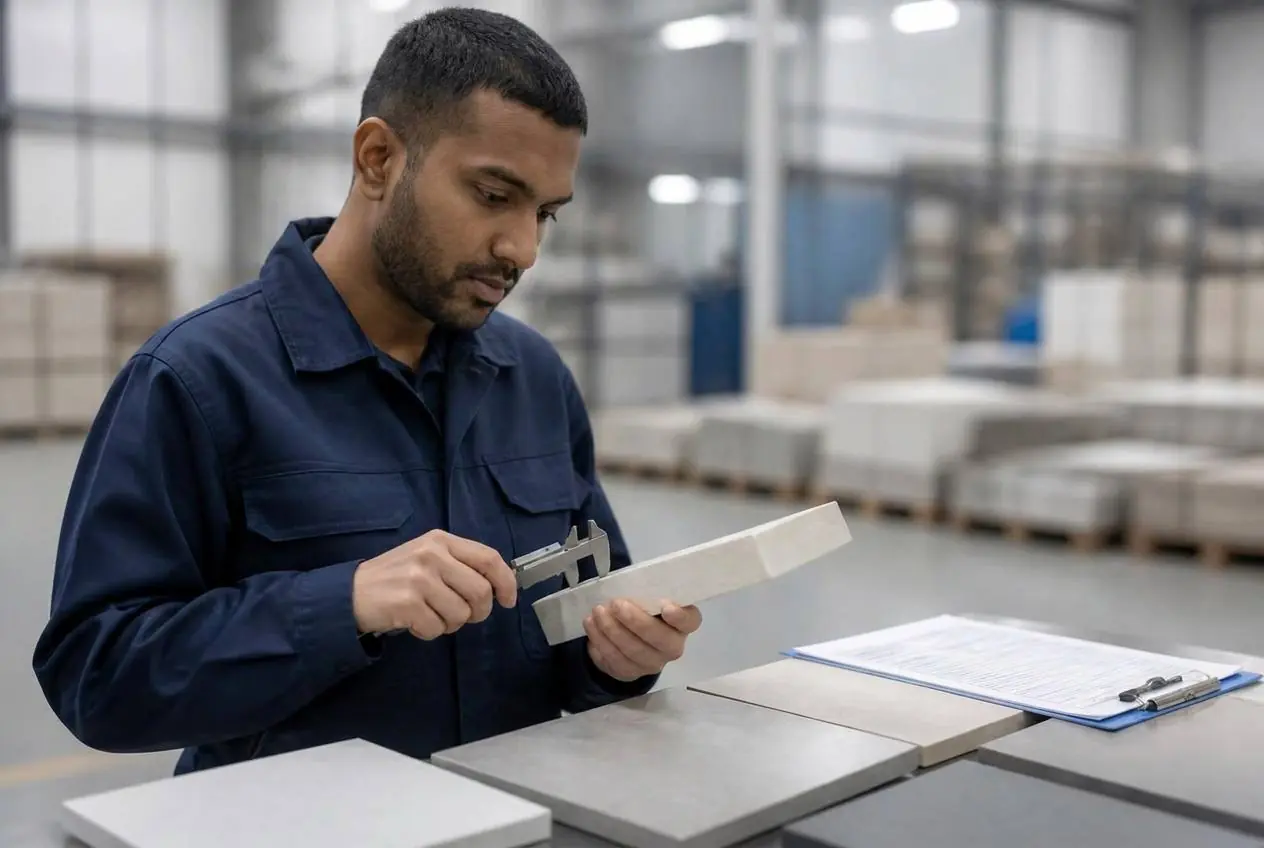
Akarta runs an in-house quality department with inspectors assigned to each division. Goods are checked at the factory during production and again before loading, against the written specification agreed on your purchase order — not against the factory's own grading.
- Pre-production sample approved by the buyer before bulk manufacture begins
- In-line checks during production for shade, calibration, dimension and moisture
- Pre-shipment inspection with photographic report before container sealing
- Third-party inspection (SGS, Bureau Veritas, Intertek) arranged where required
ISO 9001:2015
Certified quality management system
Govt. approved
Registered Indian merchant exporter
In-house docs
Export paperwork prepared by our team
Packing & shipping
Packed the way your market receives it
Fabric damage in transit is nearly always moisture, crushed roll edges or lost roll identity. Packing is specified to prevent all three, and every roll carries its own ticket.
- Rolls wound on paper or plastic cores, 50–100 m per roll as specified
- Individual polythene sleeves with roll ticket showing shade lot, metreage and construction
- Roll-edge protection and cross-strapping in the container
- Bale packing with hessian and strapping for greige programmes
- Knitted fabric relaxed before rolling to prevent set creases
- Silica gel and moisture-barrier liners for monsoon and long-transit shipments
- Container floor dunnage and roll-wise stow plan for wide widths
- Roll-wise packing list with metreage summary issued before dispatch
Documentation
Paperwork prepared in-house, not outsourced
Every consignment travels with a complete document set, prepared by our own documentation team and checked against your letter of credit or contract terms before dispatch.
Technical pack
Yarn count, EPI/PPI or gauge and loop length, weave or knit structure, width, finished GSM, finish route and shrinkage tolerance per quality.
Test & certification file
GSM, construction verification, ISO 6330 shrinkage and spirality, fastness to wash, water, rubbing, perspiration and light, tensile, tear and pilling, pH and azo-free reports; OEKO-TEX, GOTS, OCS, BCI or GRS certificates where claimed.
Inspection report
4-point fabric inspection with roll-wise defect tabulation and points per 100 m², plus shade continuity report against the approved lab dip.
Shipping set
Commercial invoice, roll-wise packing list with net and gross weight and cube, certificate of origin, bill of lading and insurance certificate where CIF.

Global reach
Quoted in your currency, shipped from your nearest Indian port
Enquiries reach us from importers, distributors, contractors and retail chains across five continents — Africa, the Middle East, Europe, the Americas and Asia-Pacific. We quote FOB, CFR or CIF, load from Mundra, Kandla, Nhava Sheva or Pipavav depending on your routing, and keep one commercial contact accountable for the consignment from purchase order to bill of lading.
Africa
Kenya, Tanzania, Uganda, Ethiopia, Nigeria, Ghana, Côte d'Ivoire, Senegal, Egypt, Morocco, Algeria, Sudan, Mozambique, Zambia, South Africa
Middle East
UAE, Saudi Arabia, Qatar, Oman, Kuwait, Bahrain, Jordan, Iraq
Europe
Netherlands, Germany, Spain, Italy, Poland, United Kingdom
Americas
United States, Canada, Mexico, Brazil, Chile
Asia-Pacific
Australia, New Zealand, Singapore, Malaysia, Vietnam, South Korea, Japan
Load ports
Mundra · Kandla · Pipavav · Nhava Sheva
Incoterms
FOB · CFR · CIF · EXW on request
Correspondence
English, with documentation to buyer-country requirements
Buyer questions
What importers usually ask us first
What does 4-point inspection mean in practice?
Every defect on the inspected roll is scored 1 to 4 points by its length, totalled and normalised to points per 100 square metres. Most buyers accept 20 to 28 points per 100 m². We inspect before cutting or shipment and give you the roll-wise tabulation, so a marginal lot is a decision you make rather than a surprise you receive.
Can you supply greige fabric only?
Yes. Greige is priced on construction plus the prevailing yarn cost, with loom-state inspection, roll-wise metreage and a stated reed and pick tolerance. Buyers who process locally usually take greige; buyers who cut directly take finished rolls.
How do you handle shade matching across a large order?
We approve a lab dip against your physical or Pantone reference, then restrict the order to as few dye lots as possible and ticket every roll with its lot. Where a programme is too large for one lot, we supply a shade band with the lots sequenced so your cutting room can keep panels within a lot rather than mixing them in a garment.
Do you supply yarn as well as fabric?
Yes — combed and carded cotton in Ne 16 to 60, compact and open-end, single and doubled, plus blended and certified organic or BCI yarn. Yarn is quoted with Uster CV%, IPI, strength and elongation data, and minimum order is normally one tonne per count and shade.
What is the difference between rope-dyed and slasher-dyed denim?
Rope dyeing gives deeper, more even indigo penetration and better wash-down character, which is why premium denim uses it. Slasher dyeing is faster and cheaper and works well for lighter weights and stretch constructions where deep character is less important. We state the route on the offer because it changes both price and finished appearance.
Common enquiries
Specifications buyers most often ask us to quote
These are the enquiries that reach this desk most weeks. If yours is on the list, we already have the grades, packing and loadability worked out — send the quantity and destination port and we will price it.
Also in this division
Related ranges
Export desk
Request a quotation
Send your product type, grade, quantity and destination port. Our export desk replies with available grades, packing options, loadability and indicative pricing — usually within one working day.