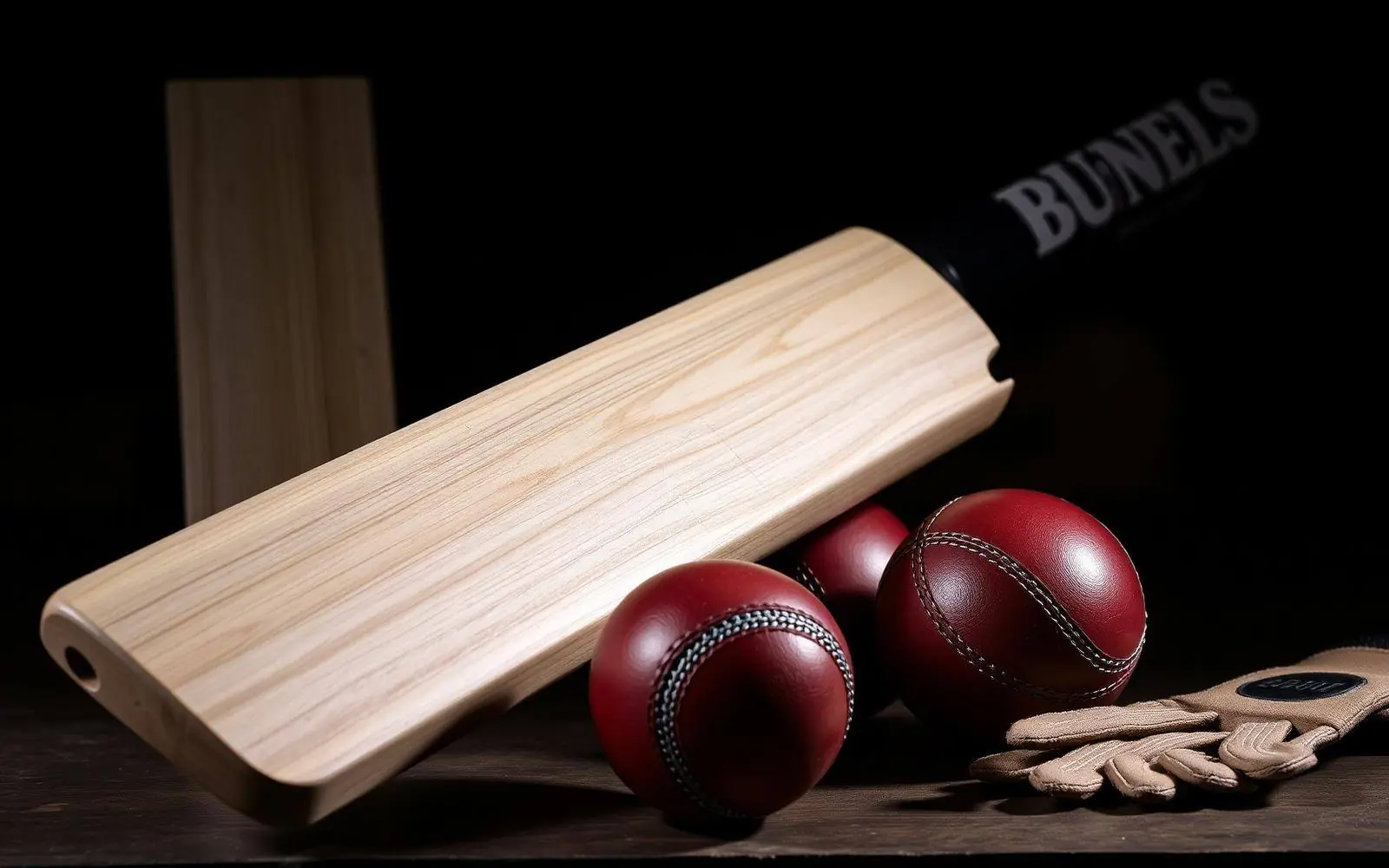
Sports goods · 01
Cricket is made in Meerut, and it is made by hand.
A cricket bat passes through eleven pairs of hands between cleft and cover. A four-piece ball takes a stitcher most of a day. No machine has replaced either process, which is why the cluster around Meerut still supplies the world — and why specification discipline, not equipment, decides whether a shipment is good.
English (Grade 1–5) & Kashmir
Bat willow
Four-piece & two-piece, hand stitched
Ball construction
Match · club · school · junior
Ranges
Meerut, Uttar Pradesh
Cluster
Overview
Grain count, weight band and pressing decide the bat
Buyers ask about willow grade first. Grade matters, but pressing matters more: an under-pressed Grade 1 bat dents on the second innings and an over-pressed one never sounds right. Both are invisible in a photograph, which is why we quote against measured parameters and hold a signed golden sample.
Bat manufacture starts with the cleft. English willow — Salix alba caerulea — arrives kiln-dried and graded from Essex and Suffolk suppliers; Kashmir willow is cut and seasoned in the Bandipora and Anantnag belt. Clefts are air-dried, then pressed on a roller press to compact the fibres to the target density, which is the single most important step in the whole process and the one most often rushed.
Shaping follows: the blade is profiled for spine height, edge thickness and toe shape, the handle is made up from Sarawak or Assam cane laminated with rubber inserts — nine, twelve or sixteen splices depending on grade — and spliced into the blade. The bat is then bound with twine at the shoulder, sanded, polished or clear-coated, gripped, stickered and toe-guarded.
Grading is cosmetic and structural at once. Grade 1 English willow shows six or more straight, evenly spaced grains with minimal blemish; Grade 2 allows minor red wood and slight grain irregularity; Grade 3 and 4 carry more colour and fewer grains; Grade 5 and practice bats are functional rather than beautiful. Playing performance correlates with grain count and pressing, not with cosmetic cleanliness alone — a point worth making to retail customers.
Balls are a separate craft. A four-piece match ball has a cork-and-worsted-wound core, four quarters of alum-tanned leather dyed and greased, and a raised seam of six rows of hand stitching — around 78 to 82 stitches per row. Two-piece balls are cheaper and quicker, used for club and practice grades. Weight and circumference are specified: 155.9–163 g and 224–229 mm for men's, 140–151 g and 210–226 mm for women's, 133–144 g for junior.
Protective equipment is where certification lives. Helmets tested to BS 7928 with fixed grille geometry, moulded and cane batting pads, keeping pads, thigh, inner thigh, arm, chest and abdominal guards. For junior and school ranges we specify EN-compliant materials and confirm that the grille gap cannot admit a ball of the relevant size.
We also supply everything around the game: stumps and bails in ash and hardwood, spring-back stumps, bowling machines, catching cradles, practice nets and cages, boundary markers, scoreboards, bat repair and knocking-in mallets, bat oil, grips, grip cones and toe tape.
At a glance
- Bat weight bands
- 2 lb 6 oz – 3 lb 0 oz for senior; harrow, size 6, 5, 4 and 3 for junior
- Bat dimensions
- Max 108 mm wide, 67 mm deep, 40 mm edge under current Laws
- Ball weights
- 156–163 g men's, 140–151 g women's, 133–144 g junior
- Leather
- Alum-tanned cowhide, four-piece and two-piece
- Helmet standard
- BS 7928 tested grille and shell geometry
- Lead time
- 40–55 days for bats, 35–45 days for balls and protective gear
How we work
We source from India's established brands — we do not manufacture
Akarta Exports is a sourcing and export house. We do not own factories and we do not claim to. Our value is that we know which well-known Indian brands and manufacturers make what, to what standard, and at what price — and we buy from them to the exact specification you give us.
01 — Your specification, written down
We start from your specification, not from a catalogue. Grade, dimension, tolerance, finish, test standard, pack, artwork and labelling are put in writing and confirmed with you before a single enquiry goes out.
02 — Matched to the right Indian brand
We place that specification with established, well-known Indian brands and manufacturers in the cluster that genuinely makes the product — Morbi for tiles, Rajkot and Ludhiana for machinery, Meerut and Jalandhar for sports goods, Kerala and Gujarat for spices.
03 — Offers compared on merit
Because we own no plant and owe no factory a minimum offtake, we compare offers openly on quality, consistency, capacity and price — and tell you where a lower price will not hold up in your market.
04 — Inspected, consolidated, shipped
Our own inspectors clear the goods at the brand's plant and again before loading. Multiple brands and multiple divisions consolidate into one container, one invoice and one document set.
Brand names are disclosed to you on the offer and named on the inspection report, so you always know whose production you are buying. Where a buyer already has a preferred Indian brand, we are happy to source that brand and handle only the inspection, consolidation, documentation and shipping.
The range
Every cricket item we export
The complete range, grouped the way a buyer's purchase order is usually structured.
- Bats — English willow
- Grade 1, 1+, 2, 3, 4 and 5 English willow bats; players', limited and standard editions; short handle, long handle, long blade and harrow sizes; 9, 12 and 16-splice cane handles; round and oval handle profiles; scoop, low, mid and high spine profiles; semi-oiled or fully-oiled and clear-coated finishes.
- Bats — Kashmir willow & training
- Kashmir willow match and club bats, popular willow school bats, tennis-ball bats in Kashmir willow and poplar, scoop-back and full-face tennis bats, aluminium and alloy training bats, plastic and PVC junior bats, softball and tapeball bats, catching and shadow-practice bats.
- Balls
- Four-piece hand-stitched alum-tanned leather match balls in red, white and pink; two-piece club and practice balls; machine-stitched training balls; junior and women's weight balls; swing and seam practice balls; wind balls, tennis cricket balls, synthetic and PVC balls; indoor and soft-training balls; bowling machine balls.
- Batting gloves & pads
- Sausage, cotton-filled and moulded-finger batting gloves in sheep and pittard leather; multi-flex and split-finger designs; boys', youth and adult sizes; left and right hand; moulded, cane and traditional batting pads in ultralight, club and match grades; junior and youth pads; inner gloves in cotton and mesh.
- Wicketkeeping
- Keeping gloves with rubber-pimple palms and web-cut variants, inner gloves, keeping pads, keeping helmets, chest guards; junior and senior sizing; leather and synthetic palm options; padded and finger-protected designs.
- Body protection
- Thigh guards, inner thigh guards, combo thigh pads, arm guards, elbow guards, chest guards, shoulder protection, abdominal guards and cups, groin guards, ankle guards; moulded EVA and high-density foam construction with mesh or fabric covers.
- Helmets
- Steel and titanium-grille helmets tested to BS 7928, fixed and adjustable grille designs, ABS and composite shells, junior and senior head circumferences, neck guards and stem guards, keeping helmets, sun peaks and helmet bags.
- Footwear & apparel
- Spiked and rubber-sole cricket shoes, half-spike and full-spike variants, cricket whites and coloured kits, sublimated team jerseys and trousers, sweaters and vests, caps, floppy hats, wristbands, socks and thermal base layers.
- Bags
- Wheelie kit bags, duffle kit bags, backpack kit bags, bat sleeves and covers, junior kit bags, coffin-style hard cases, team gear bags, ball bags, shoe compartments and helmet pockets.
- Ground & training equipment
- Ash and hardwood stumps and bails, spring-back and target stumps, boundary cones and markers, practice nets and mobile cages, catching cradles, slip cradles, rebound nets, bowling machines and ball feeders, sight screens, pitch covers, artificial pitch mats, scoreboards, bowling markers and speed guns.
- Care & accessories
- Bat knocking-in mallets, linseed and bat oil, anti-scuff sheets, fibre tape and edge tape, toe guards, replacement grips in chevron, octopus and spiral patterns, grip cones and applicators, umpire counters, coin sets, scorebooks, stump cameras mounts and repair kits.
Technical data
Cricket technical specifications
Values we quote and inspect against. Where a match standard applies, the governing figure is shown rather than a factory nominal.
Swipe table to see all columns →
| Item | Grade / type | Weight | Key dimensions | Material | Notes |
|---|---|---|---|---|---|
| Bat, senior SH | Grade 1 English willow | 2 lb 8 oz – 2 lb 11 oz | Blade 545 × 108 mm, edge 38–40 mm | Salix alba caerulea, 16-splice cane | 6+ straight grains, hand pressed |
| Bat, senior SH | Grade 3 English willow | 2 lb 8 oz – 2 lb 12 oz | Blade 545 × 108 mm, edge 36–40 mm | English willow, 12-splice cane | 4–6 grains, minor red wood |
| Bat, club | Kashmir willow | 2 lb 9 oz – 3 lb 0 oz | Blade 545 × 108 mm, edge 35–38 mm | Kashmir willow, 9-splice cane | Denser, higher durability |
| Bat, harrow | English / Kashmir | 2 lb 4 oz – 2 lb 7 oz | Blade 520 × 104 mm | Willow, 9–12 splice | For 12–15 year age group |
| Ball, match | Four-piece leather | 155.9–163 g | Circumference 224–229 mm | Alum-tanned cowhide, cork core | 6 rows hand stitch, 78–82 per row |
| Ball, women's | Four-piece leather | 140–151 g | Circumference 210–226 mm | Alum-tanned cowhide | Match grade, red or white |
| Ball, junior | Two or four-piece | 133–144 g | Circumference 210–222 mm | Cowhide or synthetic | Under-13 and under-15 use |
| Batting pads | Moulded, ultralight | 0.9–1.4 kg per pair | Boys, youth, men's, men's L | HDF and EVA over cane | Bolster and knee-roll options |
| Batting gloves | Sausage / moulded | 260–400 g per pair | Boys, youth, men's, men's L | Sheep or pittard leather | Split or fused finger design |
| Helmet | Steel or titanium grille | 800–1,150 g | 54–62 cm head circumference | ABS or composite shell | Tested to BS 7928 |
| Stumps | Ash / hardwood set | 2.5–3.5 kg per set | 711 mm above ground, 22.86 mm dia | Seasoned ash or hardwood | Set of 6 with 4 bails |
| Kit bag, wheelie | Duffle / wheelie | 2.5–4.5 kg empty | 900 × 350 × 350 mm typical | 600D–1680D polyester | Bat sleeve and shoe pocket |
Bat dimensional limits follow the current Laws of Cricket, Law 5 and Appendix B. Weight bands are indicative pick-ranges: bats are naturally variable and we sort to your requested band before packing.
Applications & markets
Ranges by playing level
A national-league retailer and a school-supply distributor need almost nothing in common except the sport. These are the four range structures we consolidate most often.
Match & professional
- Grade 1 and 1+ English willow, individually weighed and profiled
- Four-piece hand-stitched match balls, red, white and pink
- Ultralight moulded pads and multi-flex gloves
- BS 7928 tested helmets with titanium grilles
- Player-name and sponsor branding on bats and kit
- Individually numbered stock for premium retail display
Club & league
- Grade 3 to 5 English and premium Kashmir willow
- Four-piece club balls and machine-stitched training balls
- Club-grade cane pads and cotton-filled gloves
- Steel-grille helmets and full body-protection sets
- Team apparel with sublimated club identity
- Volume-priced repeat programmes across a season
School & academy
- Kashmir and popular willow bats in harrow and junior sizes
- Junior-weight balls and soft practice balls
- Junior pads, gloves and abdominal guards in graded sizes
- Practice nets, cages, cradles and bowling machines
- Durable kit bags built for shared institutional use
- Complete class-size kits supplied as one SKU
Recreational & tape-ball
- Tennis-ball and tapeball bats in willow and poplar
- Scoop-back and full-face designs with thick edges
- Wind balls, synthetic balls and tennis cricket balls
- Plastic and PVC sets for garden and beach play
- Bright colourways and retail blister packaging
- Low price points with parcel-safe cartons for e-commerce
Division in numbers
11
Hands per bat
From cleft to finished cover
6 × 80
Stitches per ball
Six rows, hand stitched
BS 7928
Helmet standard
Tested grille and shell
40–55
Days to load
Custom-branded bat production
Quality assurance
Nothing leaves India until our own inspectors clear it
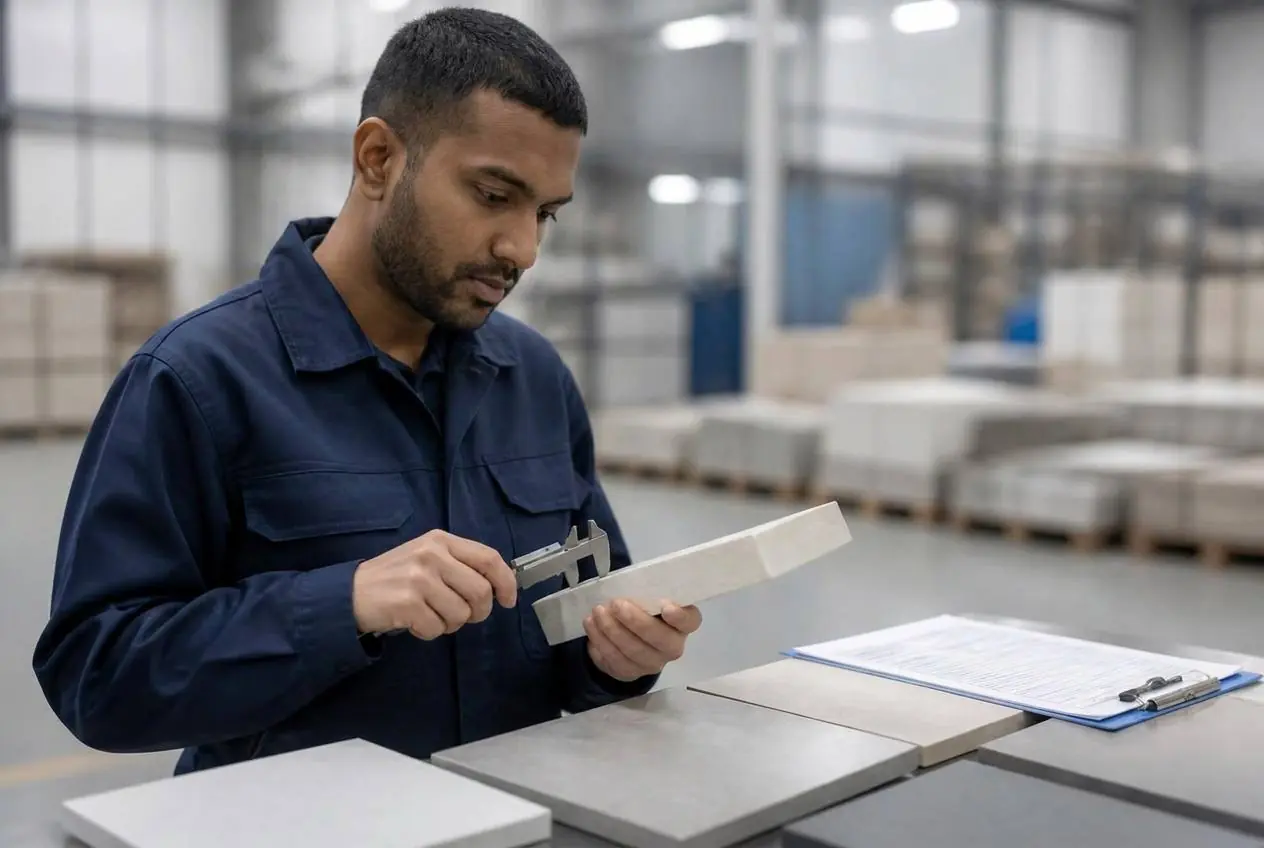
Akarta runs an in-house quality department with inspectors assigned to each division. Goods are checked at the factory during production and again before loading, against the written specification agreed on your purchase order — not against the factory's own grading.
- Pre-production sample approved by the buyer before bulk manufacture begins
- In-line checks during production for shade, calibration, dimension and moisture
- Pre-shipment inspection with photographic report before container sealing
- Third-party inspection (SGS, Bureau Veritas, Intertek) arranged where required
ISO 9001:2015
Certified quality management system
Govt. approved
Registered Indian merchant exporter
In-house docs
Export paperwork prepared by our team
Packing & shipping
Packed the way your market receives it
Bats bow, balls scuff and leather sweats. Cricket packing is specified per item, and the container is loaded so that nothing heavy sits on anything shaped.
- Bats individually sleeved, toe-taped and packed flat in five-ply cartons of 10 to 20
- Match balls in printed retail boxes of 6 or 12, then mastercartoned with silica gel
- Gloves and pads poly-bagged in pairs with desiccant, boxed by size and hand
- Helmets boxed individually with grille protection and shell padding
- Stumps bundled, end-capped and strapped to prevent splitting
- Kit bags compressed, poly-wrapped and mastercartoned to reduce cube
- Retail cartons printed to your artwork with size, weight band and barcode
- Carton-wise packing list keyed to SKU, size and weight band
Documentation
Paperwork prepared in-house, not outsourced
Every consignment travels with a complete document set, prepared by our own documentation team and checked against your letter of credit or contract terms before dispatch.
Bat specification sheet
Willow grade, grain count, weight band, edge thickness, spine profile, handle splice count and finish, with photographs of the approved sample.
Ball test report
Weight, circumference, seam height, stitch count and rebound checked per production batch, with retained samples.
Protective compliance file
BS 7928 helmet reports, material declarations for pads and guards, and REACH or phthalate testing on synthetic components where required.
Inspection & shipping set
AQL 2.5 pre-shipment report with measured weights, plus invoice, packing list, certificate of origin and bill of lading.

Global reach
Quoted in your currency, shipped from your nearest Indian port
Enquiries reach us from importers, distributors, contractors and retail chains across five continents — Africa, the Middle East, Europe, the Americas and Asia-Pacific. We quote FOB, CFR or CIF, load from Mundra, Kandla, Nhava Sheva or Pipavav depending on your routing, and keep one commercial contact accountable for the consignment from purchase order to bill of lading.
Africa
Kenya, Tanzania, Uganda, Ethiopia, Nigeria, Ghana, Côte d'Ivoire, Senegal, Egypt, Morocco, Algeria, Sudan, Mozambique, Zambia, South Africa
Middle East
UAE, Saudi Arabia, Qatar, Oman, Kuwait, Bahrain, Jordan, Iraq
Europe
Netherlands, Germany, Spain, Italy, Poland, United Kingdom
Americas
United States, Canada, Mexico, Brazil, Chile
Asia-Pacific
Australia, New Zealand, Singapore, Malaysia, Vietnam, South Korea, Japan
Load ports
Mundra · Kandla · Pipavav · Nhava Sheva
Incoterms
FOB · CFR · CIF · EXW on request
Correspondence
English, with documentation to buyer-country requirements
Buyer questions
What importers usually ask us first
How much difference does willow grade actually make to play?
Less than most retail customers assume. Grade primarily describes cosmetics — grain count, straightness and blemish — and only loosely tracks performance. Pressing quality, spine profile and weight distribution matter more to how a bat plays. A well-pressed Grade 3 bat frequently outplays a poorly pressed Grade 1. We hold pressing to a measured density target rather than leaving it to the workshop's judgement.
Do bats need knocking-in before use?
Yes, and this is the most common warranty issue in export cricket. Semi-oiled bats need six to eight hours of progressive mallet work plus gradual net use before match play. We can supply bats pre-knocked and match-ready at additional cost, and we include knocking-in instruction cards in retail packaging so the end customer does not blame the factory for a fault they created.
What is the real difference between four-piece and two-piece balls?
A four-piece ball has four leather quarters over a wound cork core, which holds its shape and seam far longer — it is what match cricket requires. A two-piece ball has two hemispheres, is quicker and cheaper to make, and goes soft sooner. Two-piece is entirely adequate for practice, school and club-training use and typically costs 35–50% less.
Can you match a competitor's bat that we send as a sample?
Usually yes. Send the physical bat and we return a matched sample against measured spine height, edge thickness, weight, balance point and handle profile, with your own graphics. We do not copy trademarks or protected designs — the geometry and specification are matched, the branding is yours.
Are helmets certified for the UK and Australian markets?
Helmets are produced and tested to BS 7928, which is the standard those markets reference, including the grille-gap requirement that prevents ball intrusion. Test reports are issued per production batch. If your market requires an additional national mark, tell us at quotation stage and we route production to a factory holding it.
What sizing should a school order cover?
A practical school range covers sizes 4, 5, 6 and harrow bats, junior and youth pads and gloves, junior-weight balls at 133–144 g, and junior helmets in 54–58 cm. We usually quote a class kit as a single SKU with a stated size mix, which keeps a tender submission simple and the reorder predictable.
Common enquiries
Specifications buyers most often ask us to quote
These are the enquiries that reach this desk most weeks. If yours is on the list, we already have the grades, packing and loadability worked out — send the quantity and destination port and we will price it.
Also in this division
Related ranges
Export desk
Request a quotation
Send your product type, grade, quantity and destination port. Our export desk replies with available grades, packing options, loadability and indicative pricing — usually within one working day.